

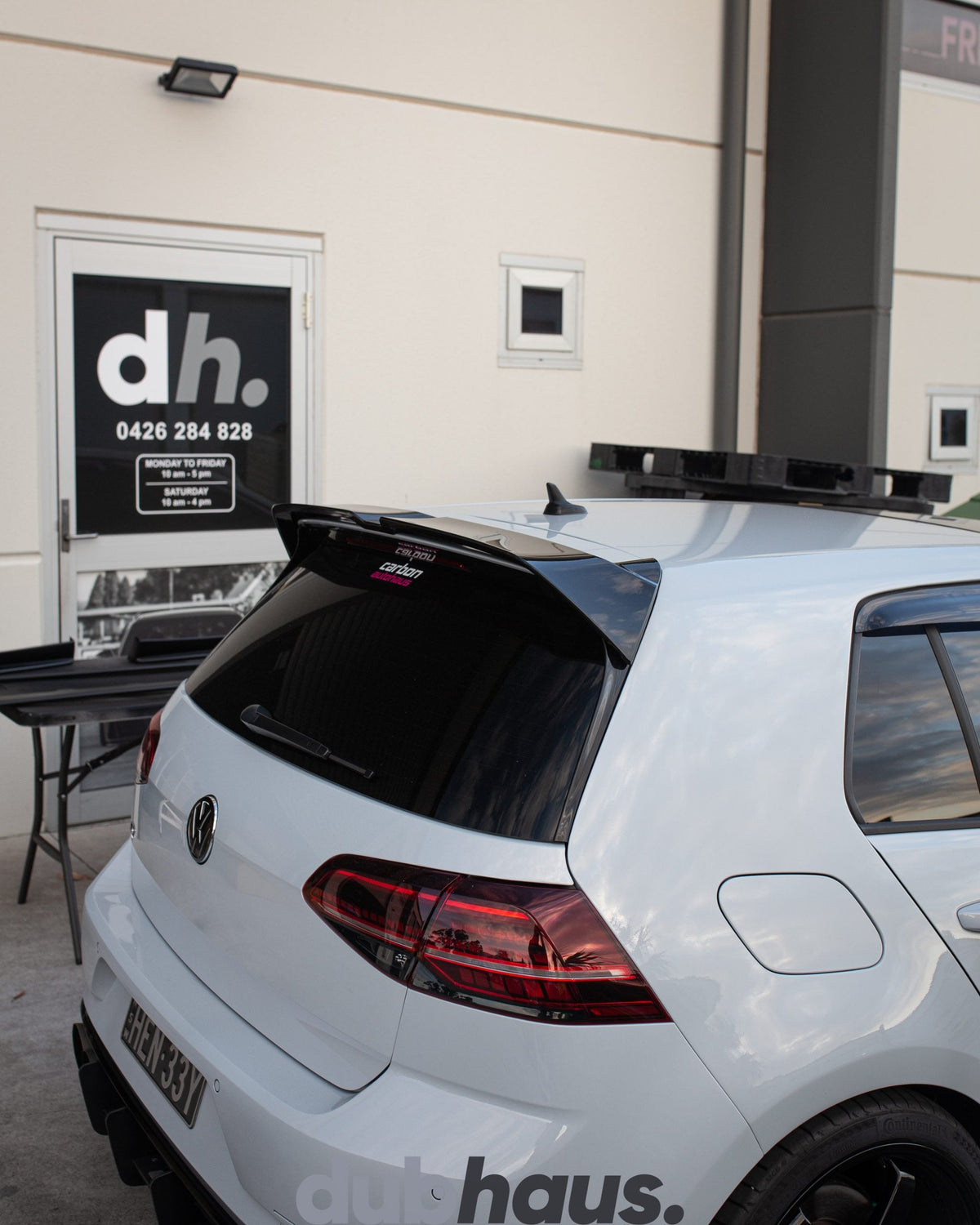
Every enthusiast has stood in a car park and had the same argument: does that rear wing actually do anything, or is it just there to look fast? It's one of the most searched questions in the modding world, and it deserves an honest answer rather than a sales pitch. So here it is, from people who sell wings for a living and would rather you buy the right one than the wrong one. Aftermarket rear wings absolutely can work — but whether they'll do anything meaningful on your car, at the speeds you actually drive, is a different question entirely. Let's pull it apart properly.
What a rear wing is actually meant to do
A rear wing is an upside-down aeroplane wing. Air passes over it and, instead of generating lift, it generates downforce — pushing the rear axle into the road. More load on the rear tyres means more rear grip, which helps with traction out of corners, stability under brakes, and confidence at speed. That's the theory, and on a genuine race car it's night and day. A properly designed wing, mounted up in clean airflow above the boot, can add real, measurable rear grip. This is why touring cars, GT cars and time-attack builds run enormous wings — they need every kilo of downforce they can find.
The honest bit: downforce and speed
Here's the part most sellers won't tell you. Aerodynamic downforce rises with the square of your speed. Double your speed and you roughly quadruple the force. The practical consequence is that at 60–80 km/h around the suburbs, even a well-designed wing is producing very little — we're talking a handful of kilos, not a magic grip machine. The forces only become genuinely useful once you're up past highway speeds and onto a track or a fast open road. So if your car never sees more than a spirited on-ramp, a rear wing is doing far more for the way your car looks than the way it drives. That's not a reason to avoid one — plenty of great mods are about the look — but you should buy it knowing that's the deal.
A wing and a spoiler aren't the same thing
Worth clearing up, because the terms get thrown around interchangeably. A spoiler (like a boot lip or ducktail) sits on the bodywork and "spoils" or tidies airflow coming off the car, often reducing lift and drag with a subtle look. A wing stands off the boot on stanchions so air can flow both over and under the aerofoil, which is what actually generates downforce. Neither is better — they do different jobs and suit different builds. If you're weighing one against the other, we've written a full comparison, linked at the bottom.
When a rear wing genuinely earns its keep
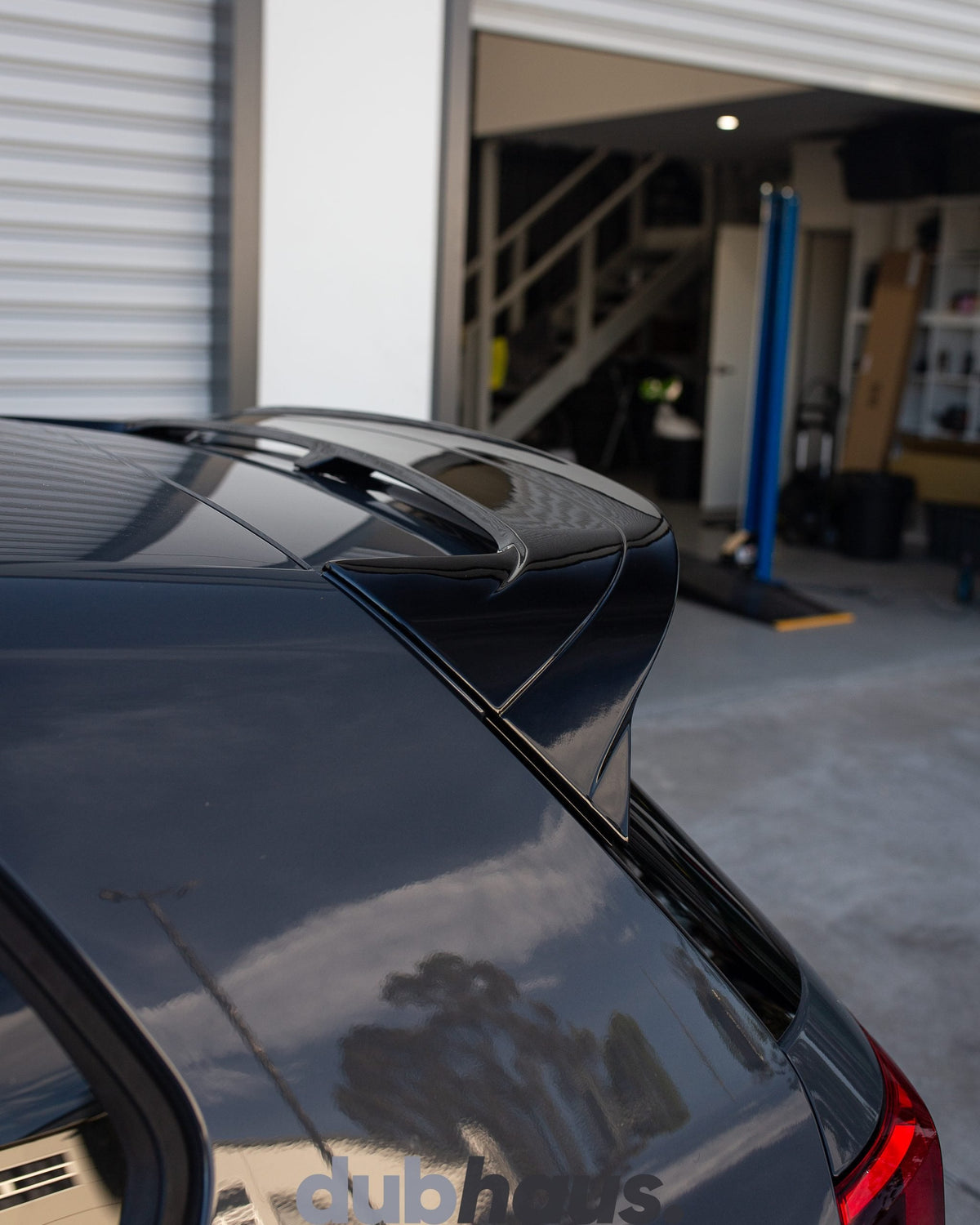
There are real-world cases where an aftermarket wing pays for itself. If you do track days or fast hillclimb runs, a proper aerofoil-profile wing mounted in clean air will add stability where it counts and can genuinely improve lap-time confidence. If you've built serious power and find the rear getting light at the top of third gear, aero helps plant it. And if you're chasing a specific motorsport-inspired look — the OSIR and Oettinger-style wings for the MK7 Golf are popular exactly because they nail that factory-plus aesthetic without looking like a bolt-on afterthought — then a wing is the right call, provided you buy it for what it is. The key is honesty about which camp you're in: track and big-power builds get a functional benefit; street builds get a look. Both are valid.
The downsides nobody mentions
A wing isn't free performance. Mounted at the wrong angle, or in the dirty air low behind a hatchback's roofline, a wing can add drag without adding useful downforce — costing you a little top-end and economy for no grip in return. Add too much rear downforce without matching front aero and you can actually make the car understeer and feel worse balanced than stock. On a hatch or wagon, a heavy wing bolted to the tailgate puts extra load on the hinges and struts over time, so mounting quality matters. And then there's the finish: cheap wings arrive with wavy gel-coat, poor fitment gaps, and paint that fades. None of this means don't buy — it means buy properly.
What to actually look for when buying a wing
Prioritise fitment first. A wing designed specifically for your chassis — with pre-drilled, correctly located mounting points — will sit straight, seal properly and spread load the way it should. Universal "one size fits all" wings are where most regret comes from. Next, look at the material and construction: quality ABS or fibreglass is fine for a street look, while genuine carbon is worth the premium mainly if you want the weight saving and the finish. Check how it mounts — bolt-through with backing plates is far stronger than adhesive alone for anything that generates real load. Finally, think about finish: gloss black is easy and looks sharp on most cars, but colour-matched or carbon options cost more and take longer, so factor that in.
A quick word on legality in Australia
Because we're an Aussie shop, we'll say it plainly: a rear wing needs to be securely mounted and shouldn't create a sharp or dangerous protrusion, and modification rules vary by state. A tidy, well-fitted wing on a road car is rarely an issue, but oversized track wings can draw attention at inspection time. If your car is your daily and you care about staying defect-free, keep it sensible and mount it properly. When in doubt, check your state's guidelines before you drill.
So, are aftermarket rear wings worth it?
Honestly? It depends entirely on why you're buying one. If you do track days, run big power, or genuinely push your car at speed, a well-designed, properly mounted wing is worth every dollar — it adds real stability where the physics finally kick in. If you're a street driver who loves the motorsport look and knows the downforce is a bonus rather than the point, it's still a great buy — just go in with clear eyes and pick a quality, chassis-specific unit so it fits perfectly and lasts. The wings that disappoint people are the cheap universal ones bought expecting grip that was never going to appear at 70 km/h. Buy the right wing for the right reason and you won't regret it.
If you're after something that fits properly out of the box, our Oettinger-style rear wing for the MK7/MK7.5 Golf and the OSIR-style MK7 wing are both designed specifically for the platform, and you can browse the full range in our rear wings & spoilers collection. Everything ships fast Australia-wide, so you're not waiting weeks to get it on the car.
Further Reading
Still deciding on the shape of your rear-end setup? Read Rear Wing vs Boot Lip Spoiler: Which One Is Right for Your Build? for the full comparison, and if you're building a MK7 specifically, our guide to the best VW Golf MK7 mods covers where a wing fits in the bigger picture.

Leave a comment
This site is protected by hCaptcha and the hCaptcha Privacy Policy and Terms of Service apply.